The volcanic crater of Haradhat Damt, one of Yemen's most remarkable natural landmarks, became the scene of a tragedy this past Friday when 30-year-old Al-Qa'qa' bin Antar lost his life. Antar, a well-known Yemeni free climber nicknamed "Spider-Man" of Yemen fell into the crater after reportedly losing his grip while climbing approximately 120 meters above the crater floor.
The Haradhat Damt volcanic crater located near the city of Damt in the southern Yemeni province of Al Dhale.The site is a unique natural attraction known for its steep, near vertical rock walls. It is regarded as one of the region's distinctive natural landmarks.
The site becomes popular amongst extreme sports enthusiasts because of its sheer verticality and hazardous pond at the bottom. The place lacks the formal safety infrastructure of regulated climbing parks. According to local Authorities, warning about the dangers of the crater had already been issued repeatedly in the past. The site's steep and unstable rock walls make rescue operation both challenging and time consuming
"When the pursuit of a perfect video replaces the preservation of a precious life, we have stopped documenting human achievement and started filming human tragedy; the gravity that claimed him does not care about his audience, and neither should the culture that demanded his risk."
Rescue & Recovery Efforts
After the tragic Incident, emergency teams conducted a coordinated recovery operation. The rescue mission was difficult because of the crater's steep rocky walls and hard-to-reach location. Divers eventually found and recovered Antar's body from around 30 meters (100 feet) below the surface of the sulfur-rich lake at the bottom of the crater in a 4hr long rescue operation.
The Yemeni Civil Defense Authority issued a statement confirming his death and released a short video of the fall, captured as part of his stunt documentation.
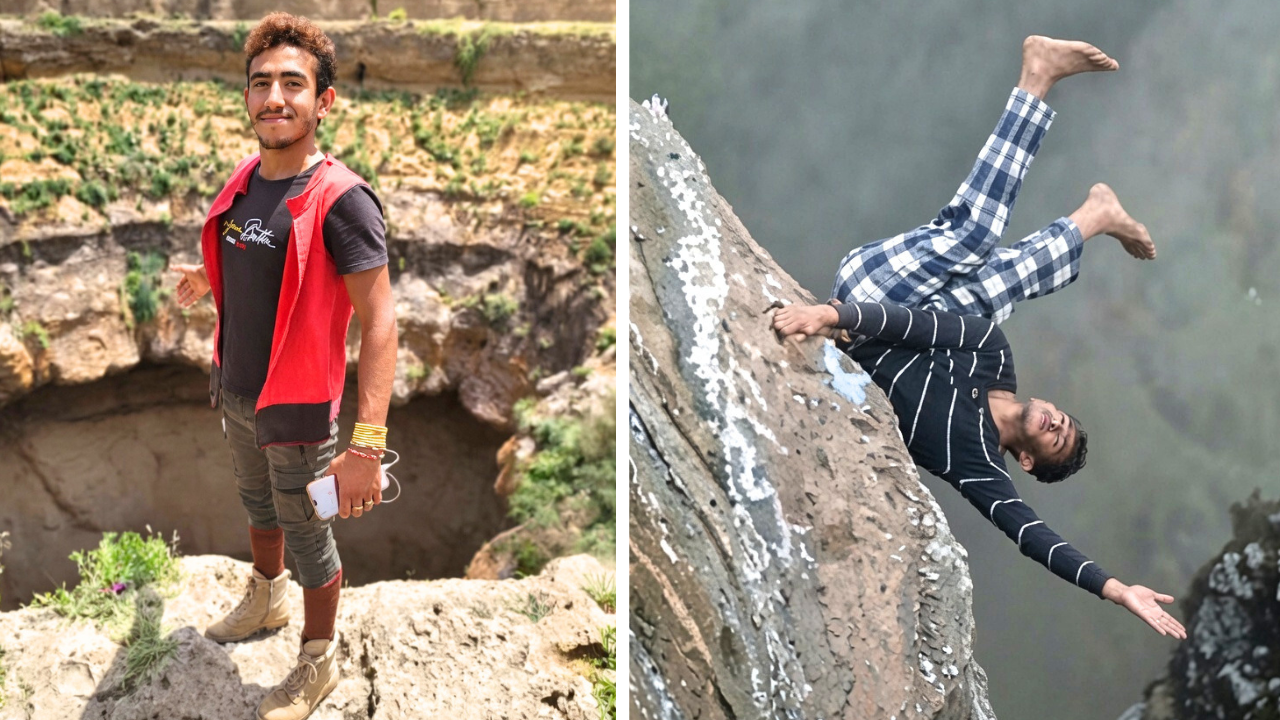
Yemen’s viral free-climber Al-Qa'qa' bin Antar
The psychology of Extreme Stunts
The Brain's Reward System: Dopamine and Adrenaline
Extreme sports and high-risk activities can trigger the release of dopamine and adrenaline in the brain.
Dopamine creates feelings of pleasure, excitement, and reward, while adrenaline boosts energy and alertness
by preparing the body to react to danger.
For some individuals, the rush created by these chemicals can become highly appealing. Over time, they may
seek bigger challenges and take greater risks to experience the same level of excitement, creating a cycle
of constantly chasing the next adrenaline rush.
Sensation-Seeking Personality
Psychologists describe "sensation-seeking" as a personality trait in which people are attracted to new, exciting, and intense experiences. Rather than seeking danger itself, many thrill-seekers are motivated by a desire to challenge themselves, test their abilities, and push their personal limits.
For these individuals, activities such as climbing, skydiving, and other extreme sports provide a sense of achievement and adventure that helps break the routine of everyday life. Their motivation is often driven by the satisfaction of overcoming challenges rather than taking unnecessary risks.
Seeking Relief Through Extreme Challenges
Some psychologists believe that high-risk activities can provide a temporary escape from everyday worries and personal struggles. When people focus completely on a demanding physical challenge, their attention shifts away from stress, anxiety, or negative thoughts.
For some thrill-seekers, the intense concentration required during activities such as climbing or other extreme sports creates a sense of mental clarity and freedom. In those moments, the challenge itself becomes a way to disconnect from daily pressures and focus entirely on the present.
Preventive Measures
Promoting Media Awareness
Educating people, especially young audiences, about how social media works is essential. Many viral daredevil videos show only the most exciting moments and often hide the risks, preparation, or consequences behind the scenes.
By understanding how social media algorithms reward attention-grabbing content, users can better recognize that extreme stunts are not always as effortless or safe as they appear. Greater media awareness can help reduce the pressure to imitate dangerous behaviors in pursuit of online popularity.
Reducing the Reward for Dangerous Content
Social media platforms can play an important role in discouraging risky behavior by limiting the visibility of content that promotes illegal or life-threatening stunts. Reducing the reach of such posts may help decrease the pressure on creators to take increasingly dangerous risks for attention and engagement.
By promoting safer and more responsible content, platforms can help shift the focus away from extreme acts and toward creativity, skill, and positive achievement. This could reduce the incentive for individuals to constantly push their limits in pursuit of online popularity.
Encouraging Responsible Online Behavior
Communities can help reduce dangerous trends by encouraging people to report risky content instead of rewarding it with likes, shares, and views. When viewers respond with concern rather than admiration, it can help change the culture surrounding hazardous stunts and discourage others from attempting them.
Understanding the Real Consequences
Safety education should emphasize the real-life consequences of high-risk behavior rather than the polished images often seen on social media. Behind a short viral video can be serious injuries, lifelong disabilities, or even loss of life. Understanding these realities can help people make safer and more informed decisions.
Have you or someone you know felt the pressure to push boundaries for the sake of digital recognition? It is time to shift our focus from the thrill of the stunt to the value of human life. Share your thoughts on how we can foster a safer online environment, and join the conversation on prioritizing responsible content over reckless risk. Let’s look out for one another—before the next notification becomes a headline..
Disclaimer: The information provided in this article is for general informational and educational purposes only. It is based on reports regarding the incident involving Al-Qa'qa' bin Antar on June 12, 2026. While every effort has been made to ensure the accuracy of the details provided, this account does not constitute professional, legal, or safety advice.