Published On: June 9, 2026
A routine lunch break at Naval Support Activity Panama City turned into a harrowing emergency on Monday, June 8, 2026, when a U.S. Navy employee was severely injured in a shark attack. The incident, which occurred in St. Andrews Bay near the facility’s Morale, Welfare, and Recreation (MWR) Marina, has drawn significant attention to the risks associated with swimming in active coastal waters.
The Incident and Emergency Response
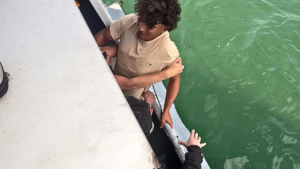
Shortly before noon, the victim—a service member in his late 20s with approximately four years of tenure at the Naval Surface Warfare Center—was swimming with a colleague when the attack occurred. Witness accounts and viral video footage captured the chaotic scene as bystanders reacted to the emergency.
Base Fire and Emergency Services personnel arrived on-site quickly, providing critical life-saving aid before transporting the victim to a local hospital. The service member sustained severe injuries to both arms; medical teams performed emergency surgery, which resulted in the loss of one arm, while doctors worked to save his other hand. As of the latest updates, his condition remains critical, and he may require additional procedures at a specialized trauma center. Base Commanding Officer Tristan Oliveira has extended his support to the victim’s family as the Bay County Sheriff’s Office and the Florida Fish and Wildlife Conservation Commission (FWC) continue to investigate the circumstances.3
Understanding Nearshore Marine Risks
St. Andrews Bay, which connects to the Gulf of Mexico, is an environment characterized by high marine activity, particularly during the early summer months. Bull sharks are known to frequent these shallow, nearshore zones, especially during their breeding season. While shark attacks remain statistically rare in Florida, experts note that specific conditions can increase the risk of an encounter:
Environmental Factors: Murky water, proximity to active fishing areas, and the presence of schools of baitfish can inadvertently attract sharks.
Time of Activity: Dawn, dusk, and nighttime are periods when sharks are naturally more active.
Human Behavior: Experts advise that swimmers avoid entering the water with open wounds, avoid wearing shiny jewelry that may mimic fish scales, and always swim in groups rather than alone.
While this incident is deeply tragic, it serves as a stark reminder that bays and coastal areas are wild ecosystems. For those working or recreating near Florida’s coastal waters, the focus must remain on proactive safety, such as observing beach warning flags and avoiding areas of high marine activity, to mitigate the potential for such life-changing events.
What safety precautions do you prioritize when spending time in or near the ocean? Please share your thoughts and best practices for water safety in the comments below to help raise awareness for others in the community.