Published On: May 10, 2026
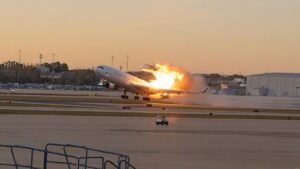
A horrifying incident at Denver International Airport has sparked national attention after a Frontier Airlines plane struck and killed a pedestrian during takeoff late Friday night. According to airport officials, Frontier Airlines Flight 4345 was departing Denver for Los Angeles on May 9, 2026, when the aircraft collided with an individual who had entered the active runway moments earlier.
The Airbus A321, carrying 224 passengers and seven crew members, was accelerating for takeoff on Runway 17L at approximately 11:19 p.m. local time when pilots reported the impact to air traffic control. Audio from emergency communications reportedly captured the crew saying: “We just hit somebody. We have an engine fire.”
Authorities later confirmed the pedestrian had jumped a perimeter fence roughly two minutes before the collision occurred. The impact caused damage and smoke inside the cabin, forcing pilots to abort takeoff immediately while emergency crews responded to the runway. Passengers evacuated using emergency slides as Denver Fire Department teams extinguished a brief engine fire. Officials stated that no life-threatening injuries were reported among passengers or crew, though several people were treated for minor injuries following the evacuation.
While runway intrusions involving people are extremely rare, aviation experts say this incident highlights how even major international airports remain vulnerable to sudden security breaches. Modern airports use fencing, cameras, patrols, radar systems, and surveillance technology to protect active runways, but large facilities like Denver International Airport cover enormous areas that can still be difficult to monitor perfectly in real time. The tragedy also demonstrates the extreme dangers involved during takeoff phases. Aircraft traveling at high speed have very limited ability to stop quickly once acceleration begins, especially during nighttime operations.
Aviation specialists further note that engine ingestion events can create catastrophic risks because jet engines operate with enormous suction forces capable of causing severe mechanical damage, fires, and debris hazards within seconds. Investigators from the FAA and NTSB are expected to review how the individual accessed the runway, how quickly the breach was detected, and whether additional perimeter technology or response measures are needed.
The incident quickly spread across X, Instagram, TikTok, and major news platforms, where reactions ranged from shock and sympathy to intense debate over airport security. Many viewers questioned how someone managed to access an active runway at one of America’s busiest airports without being intercepted earlier. Others expressed concern about the psychological impact on passengers and crew who experienced the collision and emergency evacuation firsthand.
At the same time, online criticism emerged after some viral passenger photos showed travelers taking selfies near the damaged aircraft during the evacuation aftermath. The story also reignited broader conversations about mental health crises, public safety infrastructure, and aviation security vulnerabilities in large transportation hubs.
Important Facts About Aircraft Takeoff Emergencies Most People Don’t Know
One surprising fact is that pilots are specifically trained to make split-second “reject takeoff” decisions when something catastrophic happens during acceleration. At high speeds, crews must rapidly determine whether continuing the takeoff is safer than stopping the aircraft — often within just seconds.
Another important reality is that evacuation slides are designed to fully empty large aircraft within approximately 90 seconds under certification standards, even at night or under emergency conditions.
Experts also explain that aircraft engines can ingest surprisingly large objects, including birds, debris, and unfortunately humans, which may immediately trigger fires, compressor damage, or engine failure. That is why runway security is treated as one of the most critical safety layers in global aviation operations.
Credits
Viral footage and passenger images circulated through X accounts including @FearedBuck alongside reporting from Reuters, ABC News, CBS, NY Post, and Denver-area news outlets. Official information provided by Denver International Airport and Frontier Airlines.
Denver International Airport confirmed that the pedestrian breached the perimeter fence shortly before being struck on the runway and stated that the fence itself appeared intact during initial inspection. Frontier Airlines said the crew safely aborted takeoff and evacuated passengers following reports of smoke inside the aircraft cabin. This article is based on official airport statements, aviation reporting, and publicly available information as of May 2026. Investigation findings may evolve as FAA and NTSB inquiries continue.
Do you think airports need even stronger perimeter security systems — or are incidents like this nearly impossible to prevent completely? Share your respectful thoughts below.👇