Newly released security camera footage shows the dramatic rescue of a six-year-old boy who nearly drowned at a community swimming pool. The incident occurred on May 16, 2026, when Gregory Simmonds, an off-duty officer with U.S. Immigration and Customs Enforcement (ICE), noticed the child floating motionless in the water.
Without hesitation, Simmonds jumped into the pool, pulled the unconscious boy to safety, and began performing CPR on the pool deck. Moments later, the child regained consciousness before emergency responders arrived.
Officials praised the officer's quick actions, saying they likely saved the boy's life. Authorities have confirmed that the child is expected to make a full recovery, and the rescue has received widespread recognition from local law enforcement and federal officials.
According to the local authorities the gunfire was aimed at members of the rival group involved in the earlier fight and was not directed at the general public or nearby tourists.
Investigators secured the area around the intersection as they examined evidence from the shooting, including several vehicles that were struck by stray bullets. Among them was a blue Hyundai that sustained visible damage.
The 17-year-old suspect remains in police custody and is expected to face charges including attempted murder, assault, and illegal weapon possession. Meanwhile, investigators are reviewing surveillance footage as they work to identify and locate a second suspect seen leaving the scene.
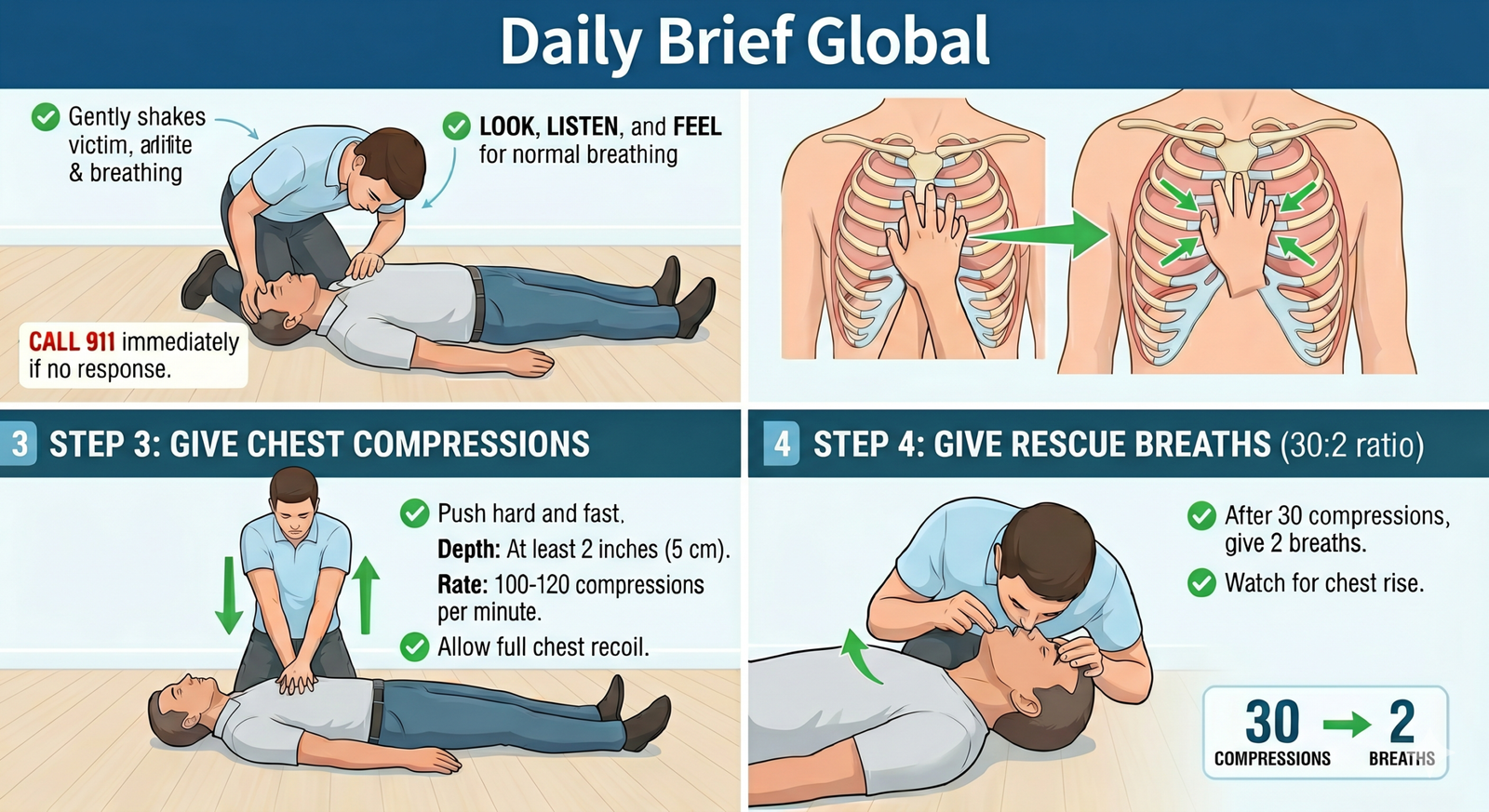
Daily Brief Global Guide: 4 Essential Steps of CPR
Why CPR Matters in Drowning Emergencies
The rescue in Pasco County highlights why CPR is one of the most important emergency skills a person can learn. In drowning incidents, a lack of oxygen can quickly become life-threatening. Every minute without oxygen increases the risk of permanent brain damage or death.
When someone stops breathing, CPR helps keep oxygen-rich blood flowing to the brain and other vital organs until professional medical help arrives. Immediate action can make the difference between life and death, especially in cases involving children.
Why Every Person Should Learn CPR
- It can save lives: Quick CPR can significantly improve a person's chances of survival during an emergency.
- Brain damage can happen quickly: The brain can begin to suffer damage within minutes if it does not receive enough oxygen.
- Emergencies can happen anywhere: Drowning incidents, cardiac arrests, choking episodes, and other medical emergencies can occur at pools, schools, workplaces, or even at home.
- Professional help may take time: CPR helps keep a person alive while waiting for paramedics to arrive.
- Anyone can learn it: Basic CPR training is widely available and can be learned by people with no medical background.
A Life-Saving Example
In this case, the six-year-old boy regained consciousness after Officer Gregory Simmonds quickly pulled him from the water and performed CPR. Officials say the child is expected to make a full recovery, demonstrating how fast action and basic life-saving skills can have a life-changing impact.
Health experts and emergency responders continue to encourage parents, teachers, coaches, and community members to learn CPR, as the skill can help save lives during the critical minutes before medical professionals arrive.
Editor's Note
Beyond the dramatic rescue, this story highlights the importance of vigilance and emergency preparedness. Drowning remains one of the leading causes of accidental injury among children, and experts consistently stress that early intervention and CPR can save lives. While the child in this case is expected to make a full recovery, the incident underscores why water safety awareness and CPR training remain valuable skills for every community.
What Do You Think?
Could you respond in an emergency? CPR training takes only a few hours but can save a life when every second counts.
Share this story to raise awareness about water safety and CPR, and follow Daily Brief Global for more important stories that matter.
.
Disclaimer:
This article is based on official statements, verified reports, and publicly available information at the time of publication. Certain details, including timelines and witness accounts, may be updated as additional information becomes available. Daily Brief Global is committed to accurate, fair, and responsible reporting and will revise this article if new verified facts emerge.