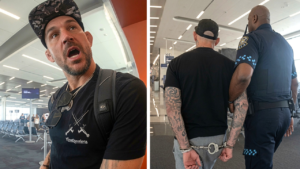
The incident in Amsterdam reveals a fundamental mismatch between traditional police tactics and the requirements of medical-sensitive environments. By applying standard street-arrest protocols—specifically high-impact physical force—to a pregnant individual, the officers triggered a cascade of secondary failures. This demonstrates a lack of “Situational Tailoring,” where the force used failed to account for the heightened biological and social vulnerability of the suspect. The subsequent escalation involving the spouse was a predictable reaction to the initial use of force, indicating that the officers lacked a containment strategy for non-combatant bystanders.
The Liability of Narrative Lag
The police institution is currently suffering from a severe “Information Deficit”.
The Power of the First Frame: By failing to provide context, evidence, or an official narrative within the first hours, the organization allowed the viral footage to define the reality of the event for the public.
Irreversible Brand Damage: The delay in transparency means the public has already solidified its opinion based on the video. Even if later evidence proves the officers followed protocol, the institutional trust is already eroded because the initial “optics” were so damaging.
Strategic Projection: The Shift Toward Mediated Policing
This incident acts as a catalyst for changing how we police hospitals and other public-service infrastructure.
The Move to Non-Kinetic Interfaces: We expect a shift toward having social service or medical intermediaries lead de-escalation, with police presence relegated to a secondary, non-contact role.
AI-Verified Conduct: There will be increasing pressure to implement real-time, automated oversight for police bodycams in medical zones, where AI monitors for excessive force and flags potential “proportionality violations” before they result in injury.
Systemic Assessment
This was not simply an instance of “bad policing”; it was a failure of organizational design. The police force deployed a “kinetic” solution (force) to an “information” problem (a disturbance), ultimately creating a medical and social crisis that the hospital was not prepared to contain. The failure to manage the scene professionally, combined with the lack of rapid disclosure, has transformed a police response into a PR and policy nightmare for Dutch authorities.
Should the management of “high-tension” environments like hospitals be removed from standard police departments and handed over to specialized, medical-tactical units that utilize non-kinetic de-escalation as their primary tool?